
RFE / NOID
Build a response around the government notice, not generic evidence.
Open dossierIndependent U.S. immigration information
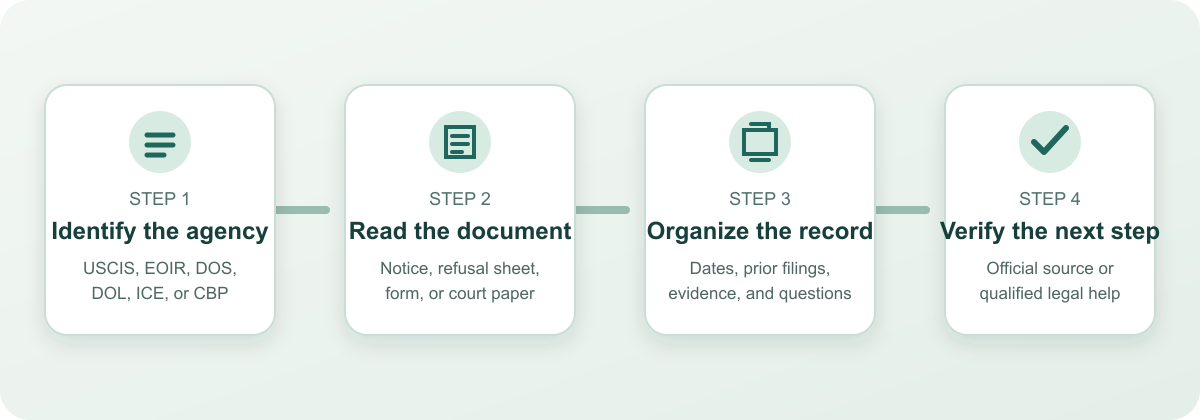
Use the notice, form, court paper, or consular instruction in front of you to identify the agency, build a reliable timeline, verify current official rules, and prepare focused questions for qualified counsel.
RFEs, NOIDs, I-130, I-485, I-765, N-400, I-601, and case status.
NTA, bond, cancellation, motions, hearings, and address-change risk.
DS forms, 221(g), administrative processing, interviews, and civil documents.
Priority case paths
Build a response around the government notice, not generic evidence.
Open dossierMarriage, family, PERM, NIW, adjustment, and consular routes.
Open dossierNTA, bond, cancellation, motions, and hearing preparation.
Open dossierUSCIS, EOIR, State Department, and DOL starting points.
Open dossierHow this guide is organized
A useful immigration file usually begins with a concrete item: an RFE, NOID, I-485 denial, marriage interview notice, H-1B RFE, consular 221(g) sheet, old removal order, waiver issue, or city-specific attorney question.
How to use this site
The safest way to read an immigration page is to connect it back to a real document: a receipt, notice, refusal sheet, interview letter, court paper, form instruction, or official agency page.
RFEs, NOIDs, denials, interview letters, NTAs, and visa refusal sheets usually matter more than a broad category name.
RFE guideUSCIS, EOIR, State Department, DOL, ICE, and CBP can each control different parts of the same immigration history.
Source listImmigration files may include family, financial, criminal, asylum, medical, and identity records that should not be posted casually.
Privacy noteA short consultation works better when deadlines, filing history, travel, status, and prior refusals are already organized.
ChecklistCity sample